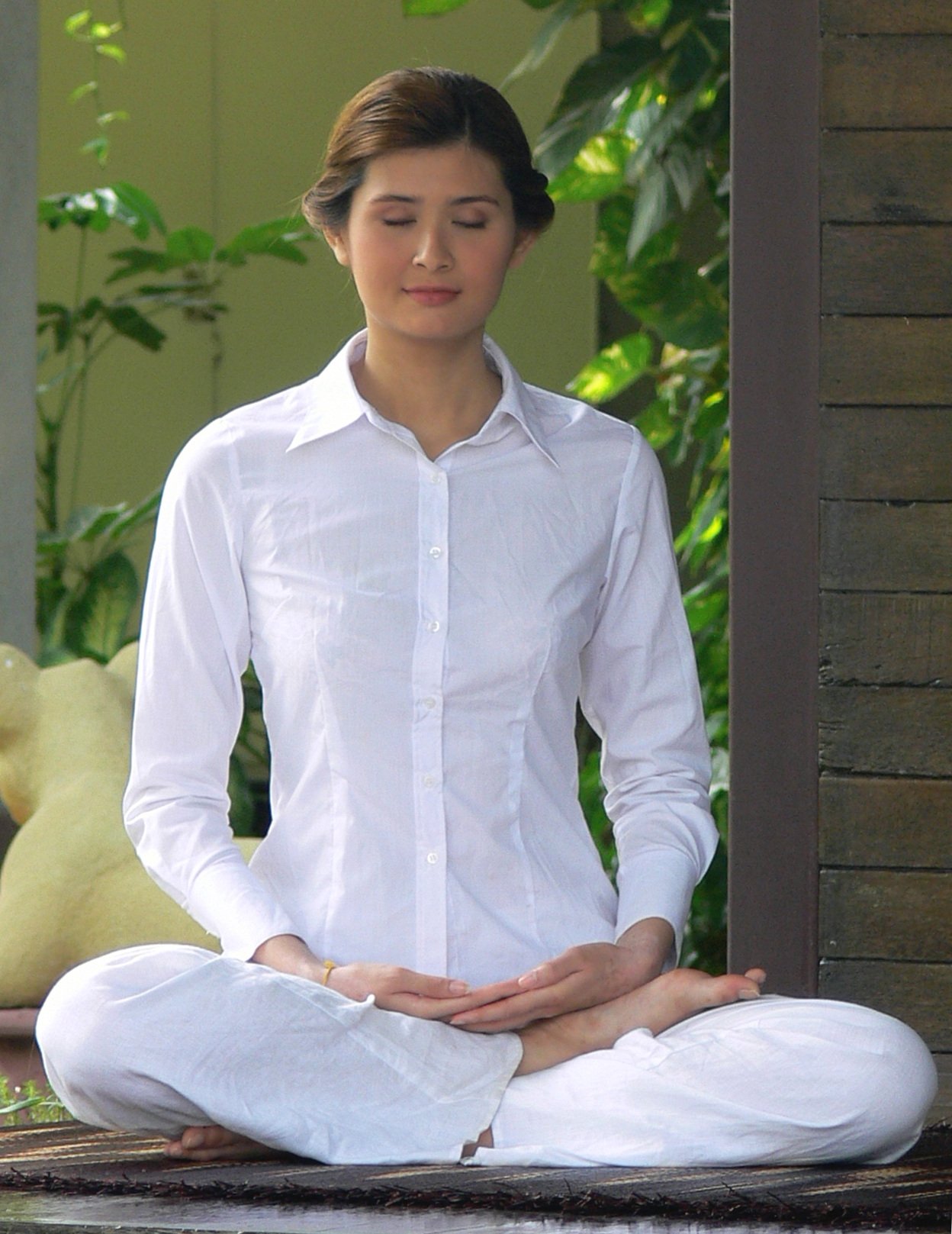
Balancing all seven chakras in one sitting means moving your attention slowly from the base of the spine to the crown of the head, pausing at each of the seven centers long enough to notice and release tension before moving to the next.
It's a longer practice than most single-chakra meditations, usually fifteen to twenty minutes, but it doesn't require anything mystical to attempt, just a quiet space and a rough map of where the seven points sit.
What are the seven chakras, in order?
Root at the base of the spine, sacral just below the navel, solar plexus above the stomach, heart at the center of the chest, throat at the base of the neck, third eye between the eyebrows, and crown at the top of the head. Traditional practice moves bottom to top, since each center is said to build on the stability of the one below it.
How do you actually move through all seven in one session?
Sit or lie down somewhere you won't be interrupted. Take a few settling breaths, then bring attention to the root chakra and simply notice what's there: tension, numbness, warmth, or nothing in particular. Spend roughly a minute or two before moving up to the sacral, then the solar plexus, then the heart, throat, third eye, and finally the crown.
Some people pair each stop with a single word (grounded, creative, confident, open, honest, clear, connected) or a soft hum at the throat. Neither is required. Attention alone does most of the work.
What does it mean if one chakra feels "stuck"?
Usually just that the area holds more tension or emotional charge than the others right now: a tight chest at the heart center after a hard week, a closed throat after swallowing something you should have said out loud. Notice it, breathe into it for a few extra breaths, and move on rather than forcing a release.
I want to be straightforward about this. Chakras aren't something you can measure, and "stuck" is a metaphor, not a diagnosis. Treat the sensation as useful information about where you're holding stress, not as a medical finding.
What's a simple word or focus for each chakra along the way?
Root can pair with a sense of weight and support, the feeling of being held up by the ground. Sacral pairs with ease and permission to feel pleasure. Solar plexus pairs with quiet confidence rather than force. Heart pairs with warmth toward whoever comes to mind first, including yourself. Throat pairs with something left unsaid that's ready to be spoken. Third eye pairs with clarity rather than answers. Crown pairs with a sense of being part of something larger than the day's to-do list.
None of this needs to be recited aloud. Holding the word loosely in mind while breathing at each stop is usually enough.
Do you need to feel something at every chakra?
No. Some sessions, most centers will feel neutral, and one or two will feel loud. That's normal and doesn't mean the practice failed. Over repeated sessions you'll start to notice which centers show up consistently for you, which is often more useful than any single sitting.
How often should you do a full seven-chakra practice?
Once or twice a week is plenty for most people, since it's longer and more demanding of attention than a short daily practice. On other days, a shorter meditation focused on whichever chakra felt loudest last time works just as well.
A way to check whether it's working
Don't judge it by whether you felt something dramatic at each stop. Judge it by the hour afterward: are you breathing lower and slower, is your jaw less clenched, do you feel less reactive to small annoyances. Those quieter shifts are the real sign the practice is doing something, more than any specific sensation during the session itself.
If you'd rather work through this with a guided structure instead of freeform attention, the chakra tarot spread gives each of the seven centers its own card and a specific question to sit with.
Frequently asked questions
How long should a full seven-chakra meditation take?
Most guided versions run fifteen to twenty minutes, roughly two to three minutes per chakra including the settling breaths at the start.
What if I fall asleep during it?
Common, especially lying down. It's not a failure, your body may simply need the rest, but if staying alert matters, try sitting up instead.
Do I need crystals or sound bowls to balance my chakras?
No. They're optional aids some people find focusing, not requirements. Attention and breath do the core work in this kind of meditation.
Can I do the chakras out of order?
Traditional practice moves root to crown, but there's no strict rule against adjusting the order if one center clearly needs attention first.
What's the difference between this and a body scan meditation?
A body scan moves through physical regions without a symbolic layer. A chakra meditation adds that symbolic layer, treating each stop as an energy center tied to a specific theme rather than only physical sensation.
Should beginners start with all seven chakras or just one?
Starting with one or two, usually root and heart, is often easier than attempting all seven right away. Once the shorter version feels familiar, extending it to the full sequence tends to go more smoothly.
Meditation supports general wellbeing but isn't a treatment for anxiety, trauma, or any medical condition; seek a professional for those.